News
SMC May Grad Arly Fitzgerald Presents Research in New York
Published on August 19, 2026 - 9 a.m.
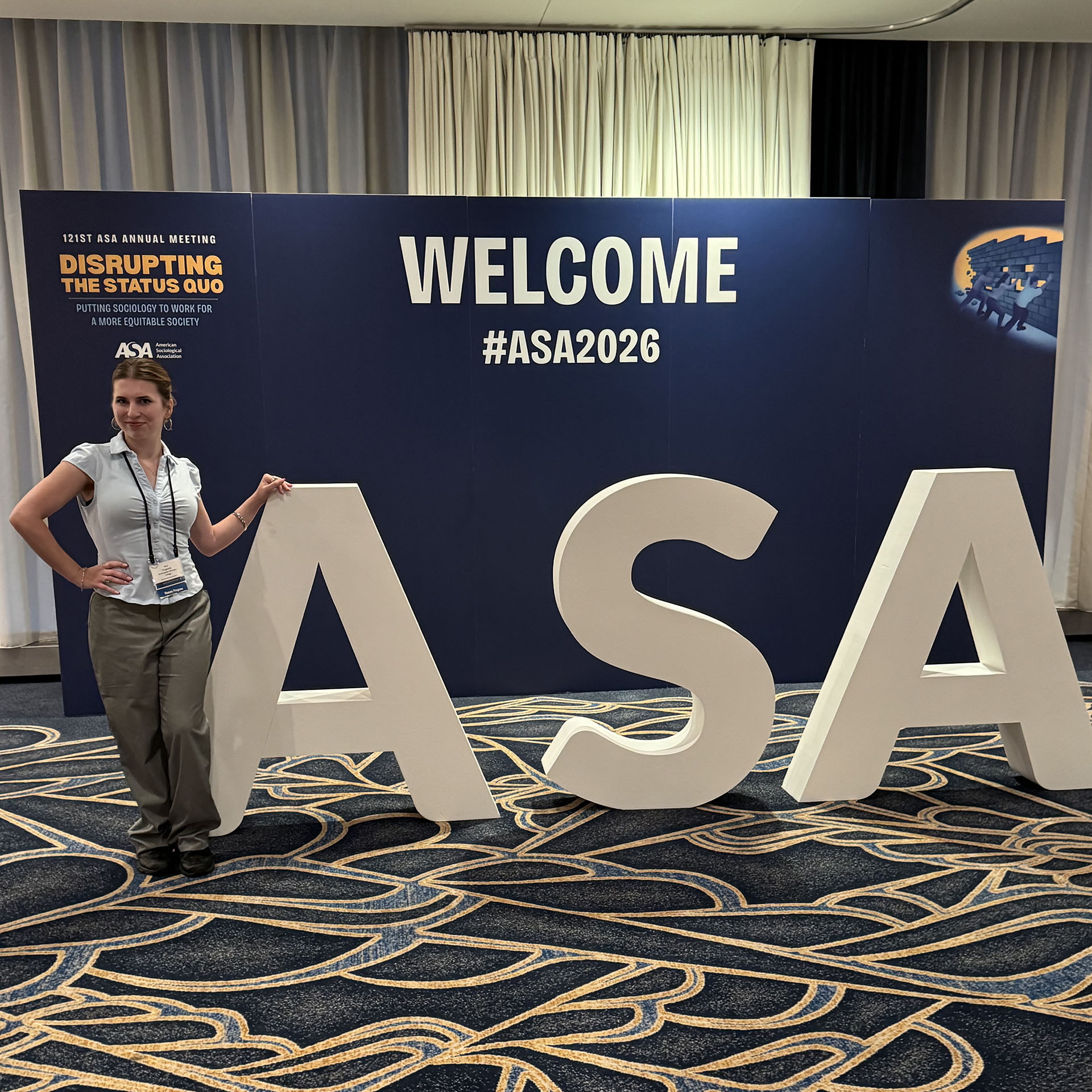
Southwestern Michigan College 2026 honors graduate Arly Fitzgerald represented SMC on a national academic stage in New York City Aug. 8.
Fitzgerald, from Eau Claire, presented original research in the American Sociological Association (ASA) Honors Program. Her project, “Generational Narratives and the Sociological Imagination: Popular Culture as a Reflection of Social Conditions from the Baby Boomers to Generation Alpha,” combined sociological analysis with five original works of art created specifically for her presentation.
Founded in 1905, the ASA is the national professional association for sociologists. Its 121st Annual Meeting, Aug. 7-11, brought together nearly 5,000 attendees and offered nearly 600 program discussions.
Within that much larger meeting, the ASA Honors Program is a highly selective, research-based undergraduate competition.
Typically, 2,000 to 3,000 students apply, with approximately 30-40 selected by invitation to present their research and be inducted into the ASA Honors Program. SMC students remain the only community college students inducted.
The 2026 Honors Program roster listed 41 undergraduate presenters from Harvard University, the University of Chicago, the University of California, Berkeley, Vanderbilt University, the University of Texas at Austin and the University of Washington.
“It was incredible to be with so many people immersed in sociology and working on master’s or Ph.D. degrees,” Fitzgerald said. “It was nice being surrounded by people with similar goals.”
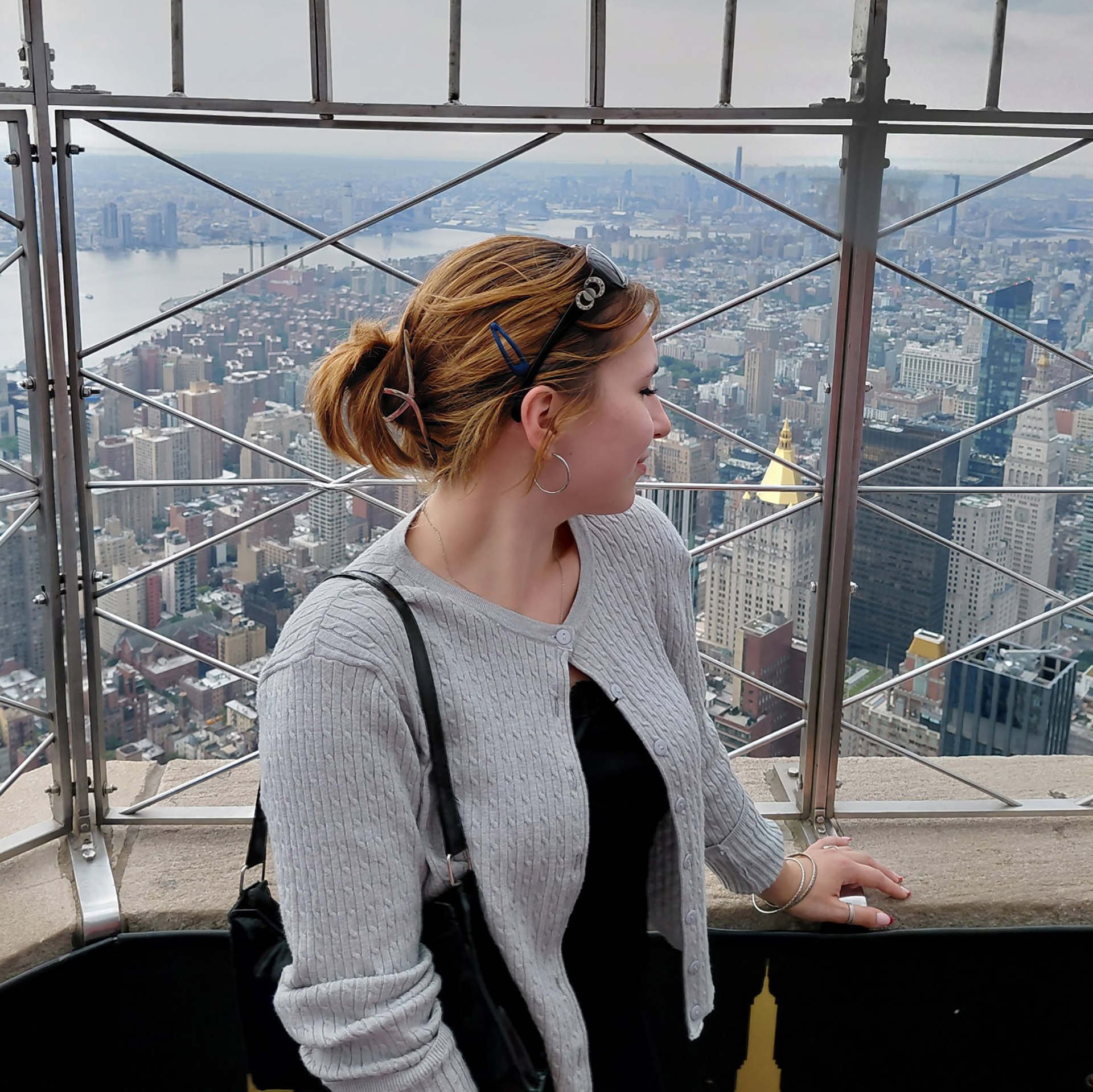
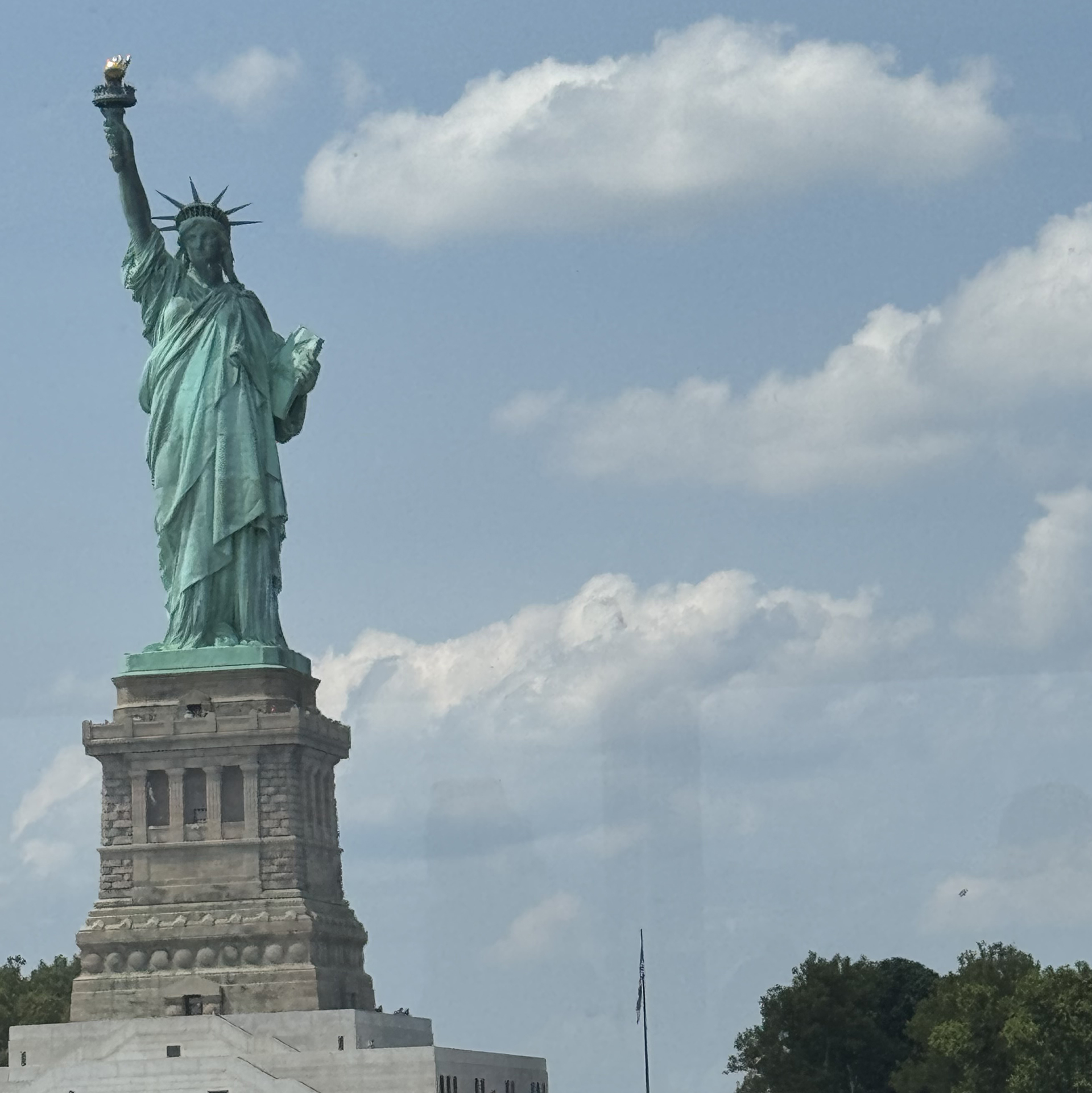
“It was an amazing, wonderful trip,” Fitzgerald said. “I’ve always wanted to see New York. It was my first time. I managed to cram in everything I wanted to see, as well as attend the conference. The Metropolitan Museum of Art was the biggest I’ve ever been to. The Empire State Building has been on my bucket list for a while. To see the whole city like that, with a storm rolling in.” They also saw the Statue of Liberty on a Manhattan sightseeing cruise.
Fitzgerald’s research began with a deceptively simple question: How do popular-culture stories reflect and shape the fears, values, identities and hopes of different generations?
Using C. Wright Mills’s concept of the sociological imagination, she connected personal attachments to books, films, superheroes and games with larger historical and social conditions.
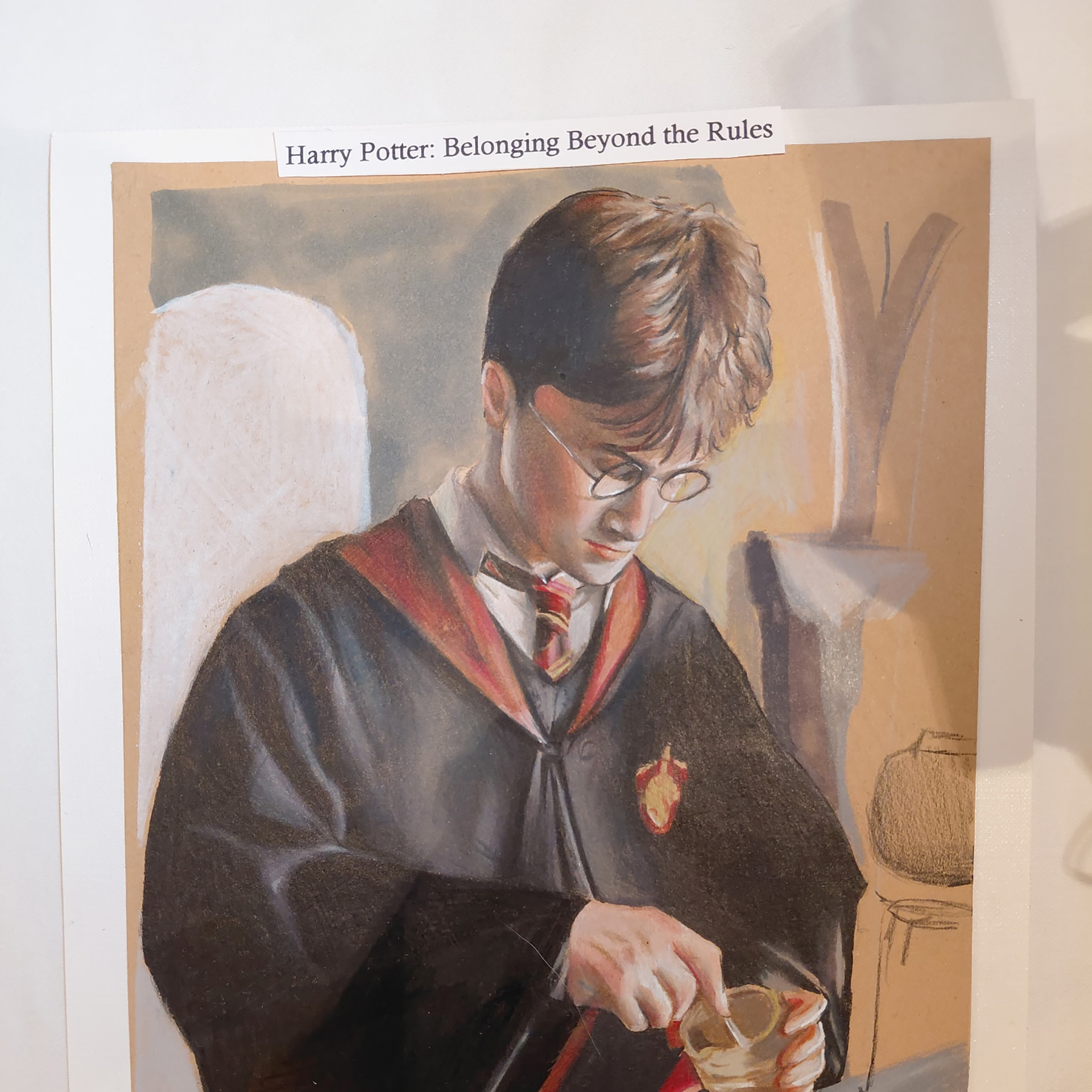
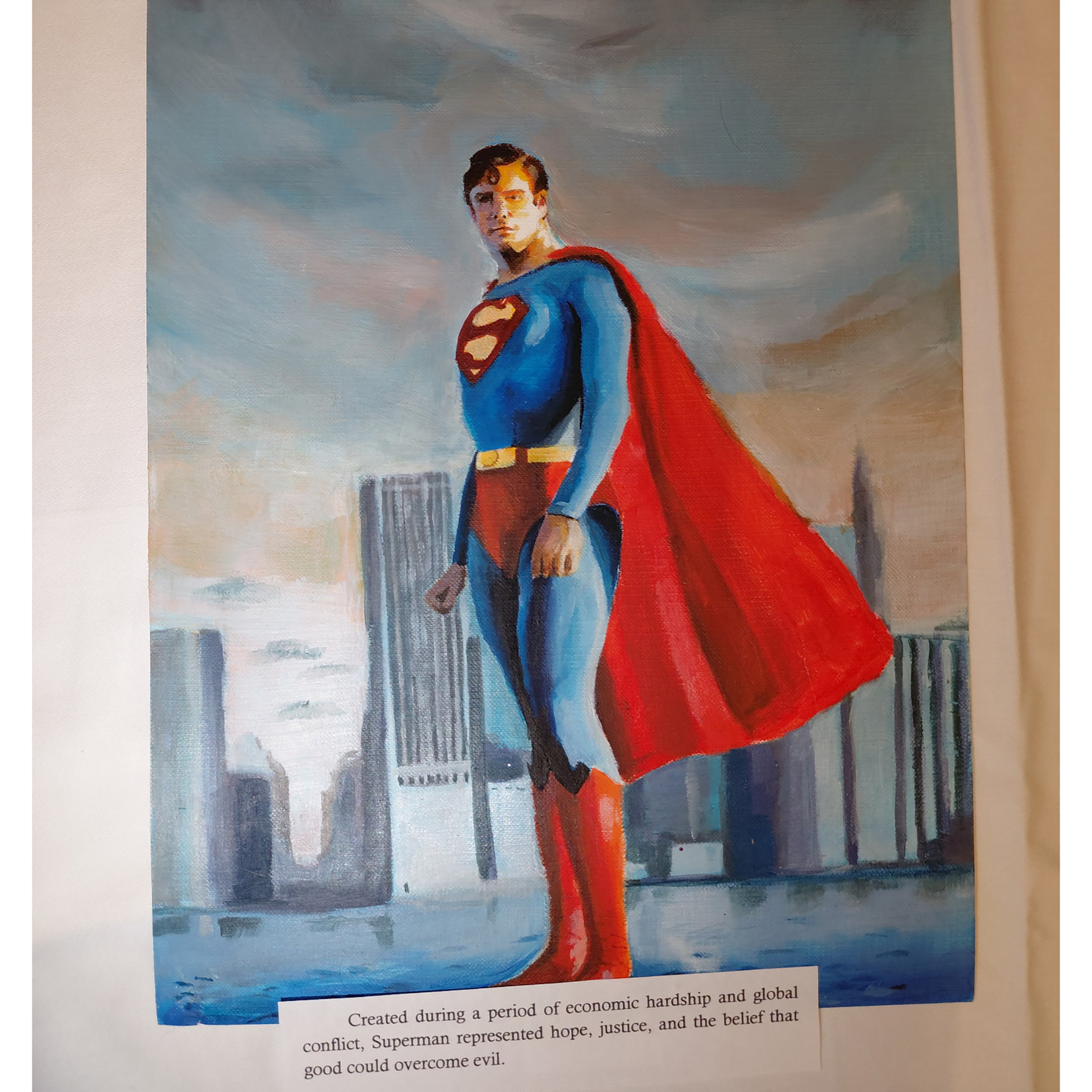
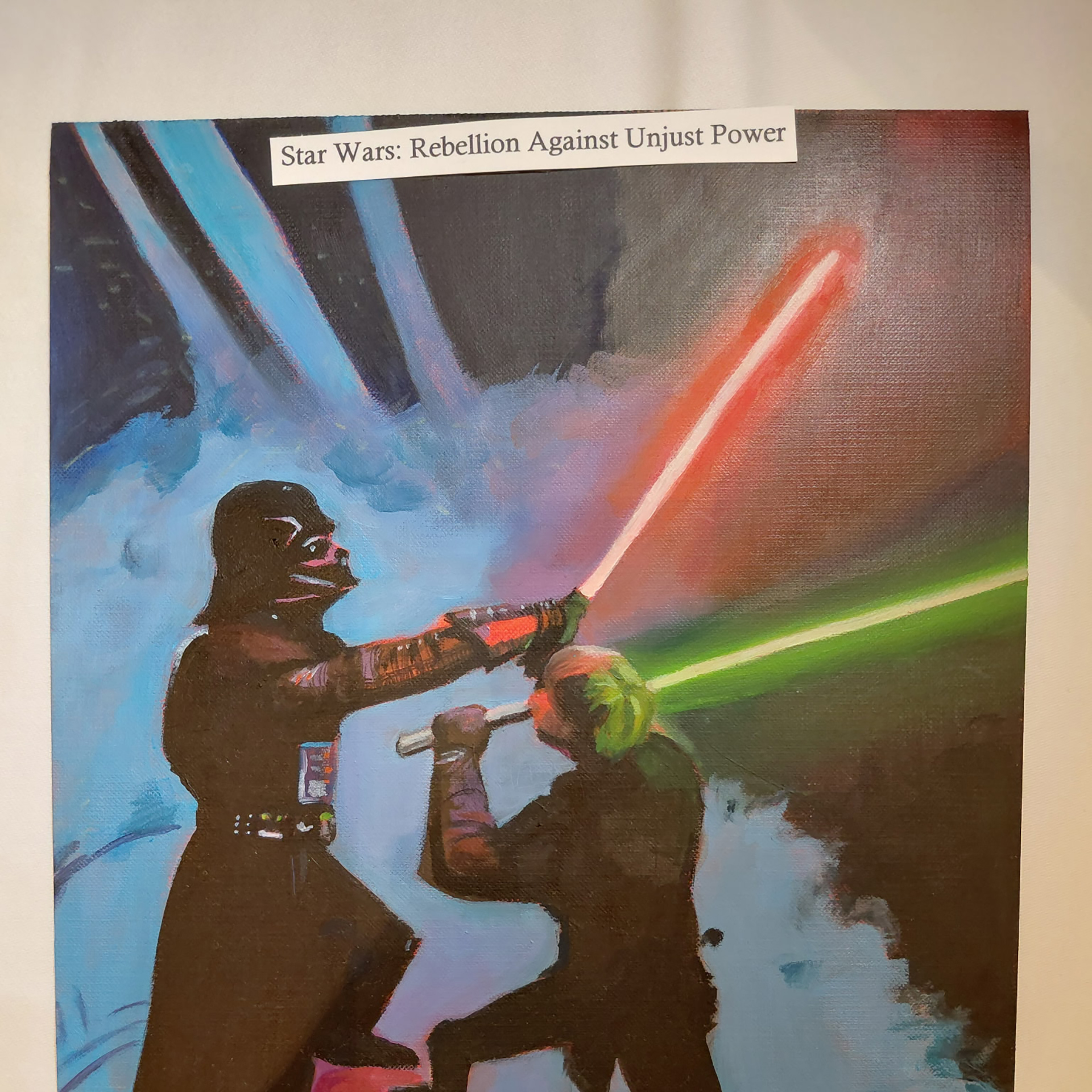
Her project compared five cultural examples: Superman, Star Wars, Harry Potter, Miles Morales as Spider-Man and digital gaming.
The argument running through her project was that popular culture is more than entertainment. Stories and characters can give people ways to interpret social change, understand authority and injustice, build belonging and imagine what kinds of action are possible.
Fitzgerald developed the project through two semesters of work with Social Sciences Department Chair Dr. Barbara Karwacinski.
Their work began in Karwacinski’s sociology courses and continued as Fitzgerald shaped the research question, strengthened the sociological framework, revised the project and prepared to present it to a national audience.
The visual component became an important part. Fitzgerald created all five works herself, with the artwork treated not as decoration but as another form of sociological interpretation.
Each piece was designed to reveal a central tension: fear and hope, authority and resistance, exclusion and belonging, vulnerability and strength, or uncertainty and agency.
Connecting research and art was natural for Fitzgerald. Last spring, she received President/CEO Dr. Klint Pleasant’s President’s Choice Award at the SMC Student Art Show for an oil painting of lighting in a stairwell.
Fitzgerald described Superman as an “inherited” cultural figure because the character was created in 1938, before the Baby Boomer generation was born. Boomers grew up in a post-World War II period marked by economic growth and suburban expansion, but also by the Cold War, racial segregation, gender inequality and fear of nuclear war.
In Fitzgerald’s analysis, Superman offered a reassuring image of moral certainty: danger could be defeated, justice could be restored and ordinary people could be protected.
For Generation X, Fitzgerald turned to Star Wars and the distrust of institutions that followed Vietnam and Watergate. Economic uncertainty and a less predictable job market also shaped the generation’s experience. Her interpretation shifts hope away from a single powerful rescuer and toward ordinary people who organize, challenge corrupt authority and act collectively.
Millennials grew up with Harry Potter books and films while also living through the rapid expansion of the internet, the Sept. 11 attacks, prolonged wars and the Great Recession.
Fitzgerald focused on outsiders who create their own community and learn that following a rule is not always the same as doing what is right. Friendship, shared struggle and moral choice become sources of belonging when institutions fail to protect people.
Fitzgerald, born in 2004, connected her own Generation Z with economic uncertainty, climate anxiety, school violence, racial justice movements, social media and the COVID-19 pandemic. Miles Morales expands the image of who can be seen as a hero while also remaining vulnerable: family, neighborhood, identity, fear and self-doubt are part of the story. In Fitzgerald’s analysis, strength does not require invulnerability. Heroism can be shared, diverse and grounded in community.
Because Generation Alpha is still young, Fitzgerald treated her conclusions as tentative. Members of this generation are growing up with digital technology from early childhood and have already experienced pandemic disruption, climate uncertainty and rapid technological change.
Unlike a book or film, a digital game requires participation. Players choose, solve problems, build, cooperate, fail and try again. Fitzgerald argued that gaming can provide creativity, friendship and a sense of agency, while also recognizing risks such as harassment, unequal access, commercial pressure and exclusion.
Placed together, the five examples reveal a broad change in the way popular culture can represent power and agency: one morally certain hero, then collective rebellion, outsider community, an inclusive and vulnerable hero, and finally an audience that actively helps build the story.
Fitzgerald was careful not to describe this as a simple progress story. Generational labels are broad categories. Race, class, gender, nationality, family background, region and access to technology shape how people experience culture.
Fitzgerald graduated as a general studies major interested in art, history and the environment. She plans to move to Kalamazoo in September and continue her studies in Fall 2027, “maybe at Western.”
“After being so involved in sociology, I’m hoping to continue with that,” she said. “I went to the conference combining two passions into visual sociology,” a subfield that studies society, culture and social relationships through photographs, films, video and other visual media.
“Sociology is intertwined with the art world,” she said. “What people think about an artwork and what they say about it says a lot about that person. I hope to continue working with art and sociology side by side like that.”
Her ASA participation illustrates what close faculty mentorship and undergraduate research can make possible at a community college. National scholarly opportunities are not limited to students at large universities. When students are encouraged to ask ambitious questions, develop original work and prepare carefully for professional settings, they can enter those conversations with something of their own to contribute.
“For 26 years, I have had the privilege of working with students at SMC, and I could not be more proud of what I have seen them accomplish,” Karwacinski said. “SMC is a very special place. Our students are known here. Faculty have the opportunity to work with them closely, to recognize their talents, to challenge them and to help them discover how much they are capable of doing. Arly and I worked together for two semesters, and I had the privilege of watching her project grow from an idea into thoughtful sociological research and, ultimately, into something uniquely her own.
“After all these years at SMC, experiences like this still remind me why I believe so deeply in this college and in our students. Community college students belong in these national academic conversations, and Arly represented SMC beautifully.”